Latest Posts:

Orkney Islands – Part 1

Friday, 1 May 2026

I’ve been meaning to go there for years and finally arrived on the scatter of islands just north of the northern tip of Scotland. Which is not John o’Groats, although that’s often looked upon as where Scotland ends, the other end of the country from Land’s End, 1407km south by road in Cornwall.

▲ My Scotrail train arrives in Thurso

I started my Orkney travels by taking the Caledonian Sleeper overnight train service from London Euston to Edinburgh and then three more trains via Perth and Inverness to Thurso. From Thurso I had to hurry to the port of Scrabster, only four km from the railway station, because my Edinburgh arrival was three hours late, due to an ‘intrusion on the line’ in the middle of the night. The excellent Galley Restaurant in Scrabster still found time to feed me, I’d phoned them to apologise that my relaxed pre-ferry dinner was not going to be so peaceful after all. Not a problem, the friendly waitress even saved me walking the final stretch from restaurant to ferry terminal by driving me there after I’d paid my bill.

▲ The ferry Hamnovae pulled out of Scrabster right on time, leaving the Holborn Head Lighthouse behind me. The first of a number of attractive lighthouses I’d be admiring in the following week.

▲ An hour later we were passing the dramatic 137metre-high Old Man of Hoy my first Orkney tourist attraction and the main reason I’d decided to approach Orkney by sea. It was first climbed in 1966.

▲ Half an hour later and just before sunset we were pull into the port of Stromness, strung along the bayside. It was only a few steps to the Ferry Inn where I spent my first two nights on Mainland. That’s the imaginative name for the largest of the Orkney Islands.

▲ The next morning I strolled down the waterfront main street of Stromness and passed the Eliza Fraser home. Now there’s a noted Australian connection and we’ve been to her Australian sand island, now increasingly known as K’gari, more than once. The Fraser story was that she was shipwrecked in 1836 and ‘enslaved’ by the indigenous people, the reality was that she was probably saved by them.

I spend some time in the very interesting Stromness Museum, lots of Stromness history, a collection of dusty stuffed birds and other creatures, exactly what you’d expect of a nicely old-fashioned museum. Plus I had a look around the very modern and surprisingly large Pier Arts Centre.

▲ The Ring of Brodgar

A number of the key Orkney Neolithic sites are at the Stromness end of the island, including the 100-metre diameter circle of the Ring of Brodgar stones. They’re part of the island’s UNESCO World Heritage Site which also includes the nearby Standing Stones of Stenness, the adjacent Barnhouse village and the large settlement area of Ness of Brodgar, still being investigated today. Plus the chambered tomb of Maeshowe, although the ‘tomb’s’ guide insisted it wasn’t a tomb at all, more of a ceremonial centre.

▲ Skara Brae, a few km away on the coast is the ‘oldest village in Europe’ – predating Stonehenge, the Pyramids or anything else you care to mention.

The five houses which make up Skara Brae are clustered together in a surprisingly compact group, but why was it abandoned and seemingly in such a ‘final days’ state? They say the village was gradually abandoned, but in fact it feels like the departure was sudden? All the houses are very similar in design, right down to the ‘dressing tables’ and the ‘stone beds’? There’s also a ‘workshop’ which was not lived in, it has no stone beds. And right by the visitor’s centre they’ve made a reproduction of building 7 at the village, so you can go in and look around.

You can also visit nearby Skaill House, the village is on the local laird’s land. And there’s the visitor centre café for a cup of tea and a scone, before the bus departs back to Stromness. I rented a car in Kirkwall for further island exploration, but on my first day out of Stromness I used the excellent local bus service.

▲ Broch of Gurness – it must have been marvellous looking at its original full height, another of Orkney’s collection of fascinating ancient sites. This one is on the north coast of Mainland near the village of Evie.

◄  A useful warning beside the fairly extensive remains of a Norse and early Christian village on the Brough of Birsay island. You can only cross the causeway to the island from two hours before to two hours after low tide. Get things wrong and you’d better call the coastguard or be prepared to camp out until the next low tide.

At the far end of the island there’s another Stevenson lighthouse, Robert Louis Stevenson decided he’d write novels instead of following the family’s lighthouse building tradition. On the mainland in the village of Birsay there’s nothing special about the St Magnus Church, but it is said to be built on the site of a far earlier church where St Magnus was first buried around 1117.

The village also has the ruined Earl’s Palace, another construction of the dastardly Patrick Stewart who I learnt about in Kirkwall.

◄  I drove to the southern end of South Ronaldsay Island, only a stone’s throw north of John o’Groats, and made the km or two walk past the Bronze Age ruins of the Liddel Burnt Mound to the Tomb of the Eagles which you can slide into either on your back or your stomach on a sort-of-skate board! That still left me with the Brough of Deerness to investigate.

▲ St Magnus Cathedral – Kirkwall, the Orkney ‘capital,’ has the most northerly cathedral in the UK and it’s a magnificent construction with a very extensive graveyard. You can sample an assortment of cathedral tours and a tour of the extraordinarily well preserved gravestone collection. Across Palace Rd from the cathedral are the ruins of the Earl’s Palace and the Bishop’s Palace. The Earl was Patrick Stewart, a disreputable scoundrel who consistently failed to pay his bills and eventually was executed for his troubles. I encountered his other palace in the village of Birsay.

Across from the front of the cathedral is the surprisingly extensive and interesting Orkney Museum, there’s so much history scattered around the Orkney Islands it clearly needs a good museum to capture some of it. And if you have any questions you can ask ‘Ragna’ the Viking farmer, she came to Orkney from Arctic Norway in 859 AD and can answer your questions with AI inspiration, the museum is clearly right up to date!

▲ Kirkwall also has the tiny but rather brilliant Orkney Wireless Museum, which has plenty of really old wirelesses (not radios!) although I really liked the little collection of early transistor radios, exactly like the one I had when I was living in Inkster, Michigan in the USA in the late ‘50s. And why were they all ‘six transistor’? After I left the museum Professor Google told me.

▲ The Italian Chapel is on the island of Lamb Holm, where Italian prisoners of war were held during WW II. They’d been captured at Benghazi and Tobruk in Libya so the climate change from sunny Italy or even sunnier north Africa to frigid Orkney must have been a shock. There’s nothing else left of the prison camp today, but the Italian prisoners gradually improved the place and asked if they could build a chapel, good Catholics I guess. They were given two Nissen huts and could work on it in their spare time and what they created was simply wonderful. A real little work of art. It should have been torn down with all the rest of the camp at the end of the war, but the Orkney islanders had taken it to heart and over the years some of the ex-prisoners have returned to Orkney to help maintain it. It’s all magnificently fake, behind the ‘paving blocks’ is just the corrugated iron of the Nissen hut.

▲ The Blockship Reginald – built in 1878, sunk in 1914 beside Churchill Barrier No 3 – the blockships were supposed to stop German U-boats getting into Scapa Flow. That idea fell over right at the start of WW II with the sinking of the Royal Oak. So the Churchill Barriers were built by the Italian prisoners of war, linking Mainland to Lamb Holm, Burray and South Ronaldsay.

I’ll get to Scapa Flow and the Scapa Flow Museum on the island of Hoy, plus Westray and Papa Westray, linked by a ferry or a most unusual flight, in my next blog Orkney Islands – Part 2

Chad – rock art, amazing scenery & dead Russian tanks

5 March 2022 | Places

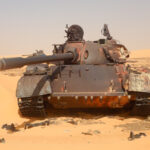
So why didn’t I know about Chad before? It’s south of Libya, north of Central African Republic, west of Sudan and east of Nigeria, Niger and Cameroon. Most of the country is in the Sahara, the real Sahara, and the north of the country features two of the Sahara’s five...

View Post

Tony’s Coronavirus Notes & Novak Djokovic

16 January 2022 | Living

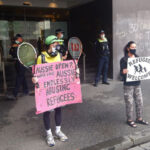
Lots of Covid-19 Johns Hopkins University’s Center for Health Security report noted recently that Greece (3,418), Ireland (3,927), San Marino (4,364), Andorra (4,554) and Cyprus (4,855) had all set new records for ‘per capita incidence per million population of new C...

View Post

The Hippie Trail

28 December 2021 | Media

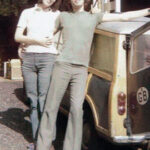
I came across this photo recently, it’s Maureen, our £65 Minivan and me, about to pack it up and set off from England. It’s July 1972, so almost 50 years ago and the Minivan would get us as far as Kabul in Afghanistan, where we sold it. We carried on to Sydney in Aust...

View Post

London – changing? the same?

9 December 2021 | Places

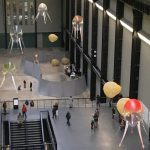
▲ There’s always something new in London, but sometimes I just wish things would stay the same. After 37 years T Burrows has departed 36 James St, just across Oxford St from the Bond St Tube Station. I’ve been a regular customer for years, great shirts, T-shirts, thei...

View Post

Flying the Other Way – London to Melbourne

22 November 2021 | Transport

Back in July 2021 I flew from Melbourne in Australia to London in England and posted how it was a surreal experience. Departing a virtually empty international terminal in Melbourne – the 35 passengers on our Singapore Airlines Airbus A350 was it for the afternoon. Th...

View Post

Corfu – our final Ionian Island

16 November 2021 | Places

Corfu is the northernmost of the Ionian Islands, at the southern end of the Adriatic Sea, almost at the heel of Italy. It’s not the biggest of the Ionian Islands in terms of land area, but it’s certainly number one in terms of tourists. The constant shuttle of cruise ...

View Post

The Ionian Islands

15 November 2021 | Places

The Ionian Islands of Greece – Zakynthos, Ithanki (or Ithaca), Corfu, Kefalonia, Lefkada, Paxi (or Paxos) and Kythira are the seven largest and there are a host of smaller ones. They step along the western side of Greece, ending where the Ionian Sea blends in to the A...

View Post

Mani Peninsula & Messenia Peninsula in the Peloponnese, Greece

10 November 2021 | Places

Having visited the walled town of Monemvasia on the Cape Malea peninsula, the second of the Peloponnese peninsulas moving west from Athens, we moved on to the other two peninsulas. ▲ Mermaid on the harbour wall at Gytheio ◄ Our second stop was Gytheio on the Ma...

View Post

Monemvasia – a Greek walled town

8 November 2021 | Places

My recent travels have taken me to Norfolk and Northumberland in England, to the island of Ibiza in Spain and to assorted Ionian islands and along the Pelopponesian coast of Greece. Monemvasia is 300km from Athens by road, rather less distance by sea. It’s towards the...

View Post

Ibiza – Spain’s Party Island

5 November 2021 | Places

It’s got a reputation as Spain’s party island – through the 1990s and into the 2000s the Manumission club nights at Sant Rafel de Sa Creu regularly pulled in 10,000 clubbers. Somehow I’d never been there so going to speak at a tourism summit in Barcelona was the oppor...

View Post