Latest Posts:
Around London
Sunday, 25 October 2026
Places I’ve been to in London recently
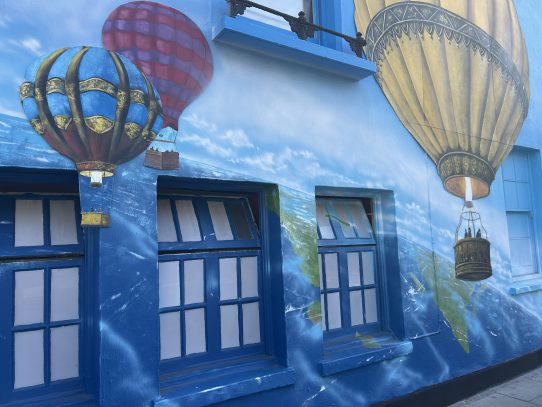 ▲ The Chelsea Arts Club – I’ve applied for membership – regularly repaints its street frontage, recently it was hot air balloons – they were called ‘montgolfiers’ when I bought a model one in Genoa.
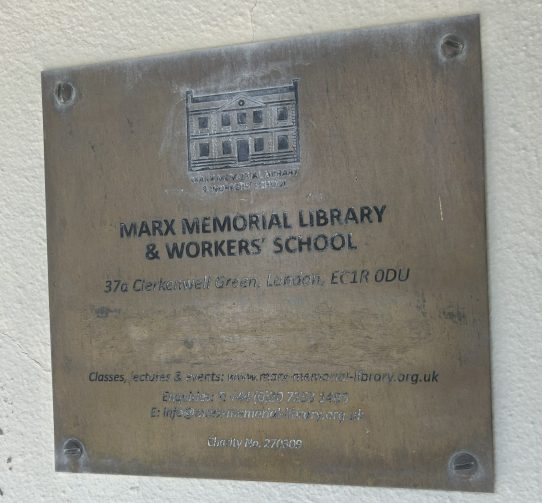 ▲ Karl Marx was here – I’ve done a number of London walks with Shelly Donaghy from the King’s Trust (I’ve got a minor connection with the trust) and wandering Farringdon we came across the Karl Marx Memorial Library & Workers’ School, in an 18th century listed building dating from 1737 as a Welsh Charity School. It opened in 1933 for the 50th anniversary of Marx’s death (and to oppose Nazi book burnings in Germany), but in fact the real connection is with Lenin, who worked in the building publishing the revolutionary newspaper Iskra in 1902-1903.
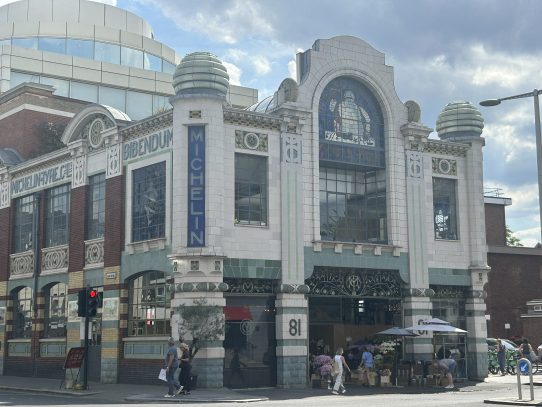 ▲ Head to the Bibendum building on Fulham Rd in Chelsea for Michelin starred (two of them) fine-dining. Even better the wonderful looking building was originally the London home of Michelin Tyres.
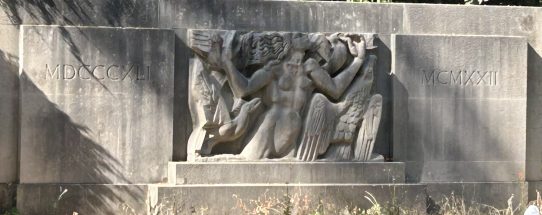 ▲ Hudson Memorial & Bird Sanctuary, Hyde Park – every time I wander through Hyde Park I chance upon something new and this time it was the Jacob Epstein sculpture of Rima, the heroine of W H Hudson’s book Green Mansions. It was regularly attacked between its unveiling in 1927 and WW II – nuidity, modernist style, whatever there were people who disliked it. The nearby Peter Pan statue was also attacked.
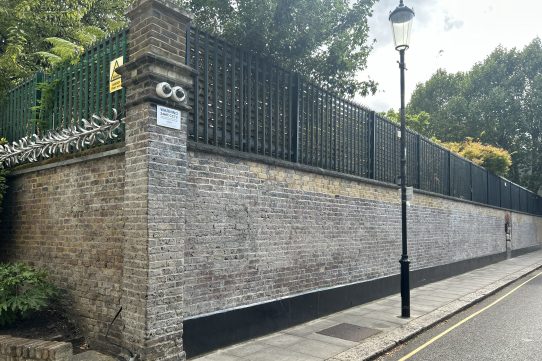 ▲ Freddie Mercury’s house Garden Lodge on Logan Place in Kensington, I regularly walk by it en route to the big Tesco Supermarket on Cromwell Rd. It’s been in the news this year because of the publication of Mary Austin’s book A Life in Lyrics: The Official Creative Legacy of Freddie Mercury. She was Freddie Mercury’s partner – until he decided he was gay – but she stuck with him and inherited the house (and lots more) after his death.
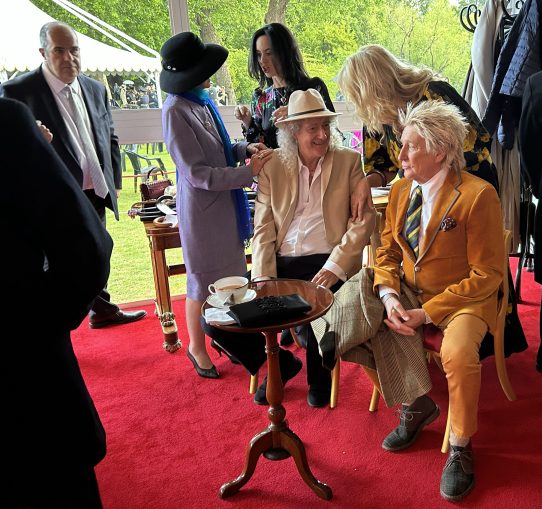 ▲ Brian May and Rod Stewart, rock stars taking tea at a Buckingham Palace garden party. When I said ‘great music’ they very politely thanked me! And that’s Stelios Haji-Ioannou, the creator of easyJet, off to the left.
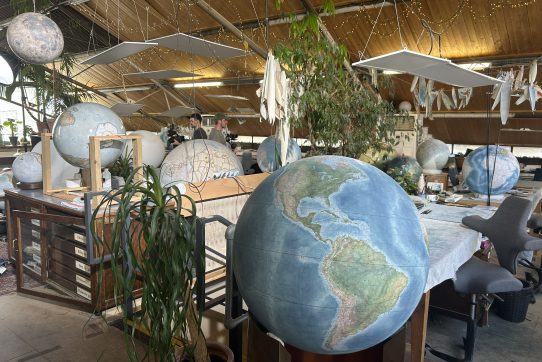 ▲ Bellerby & Company Globemakers – I did an interview about the hippie trail with a German documentary film-maker in this very suitable location in Stoke Newington. They’re steadily producing – with 30-odd staff? – very classy globes ranging from their cheapest desk globes at just over £1000, to a 127 cm (50 inch) ‘Churchill’ for up to £85,000. I was surprised how many of their globes I didn’t like at all, the last thing I’d want is a globe to show all the golf courses I’ve played at. Well none at all actually. In fact I would really like one of their globes, but purely factual please. And I don’t think I have space for a Churchill.
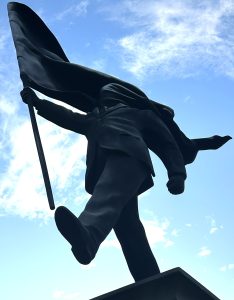 ◄ A pop-up Banksy statue which appeared overnight on 29 April 2026 at Waterloo Place/Pall Mall in central London. A pop up guard popped up beside it almost immediately and over the summer Westminster City Council claimed they had spent over £60,000 looking after it.
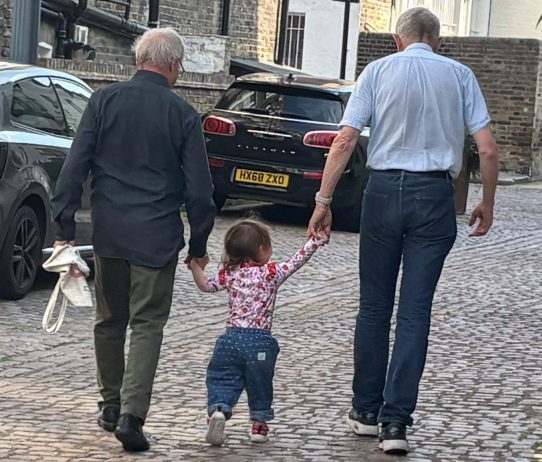 ▲ Maureen regularly claims that she can only imagine one thing worse than having to travel with me and that would be travelling with me and Simon Calder. Simon is Mr Travel in England including as travel editor at The Daily Telegraph. I often travel with Simon, I did a little USA & Canada road trip with him in 2022 and went with him to the island of Socotra (Yemen’s ‘Galapagos of the Indian Ocean’) in 2021. We checked out Soviet bus stops together in Kazakhstan on my 2017 MGB Silk Road expedition. So here’s my 1-1/2 year old grand-daughter Molly failing to realise that she is hand in hand with two very bad guides.
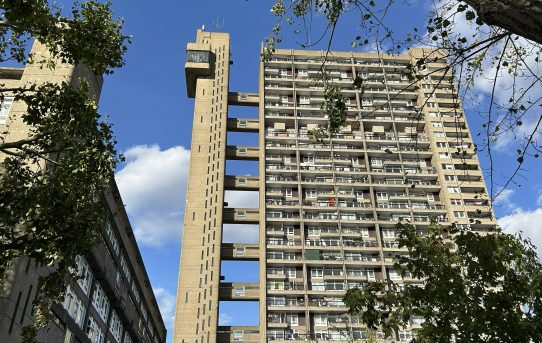 ▲ Trellick Tower, architect Ernő Goldfinger’s classic 1972 Brutalist work – I’ve seen it many times from trains approaching Paddington Station and I finally got around to taking the tube to Westbourne Park and make the short walk for a closer look. Unfortunately the only way to see inside is on occasional architectural open days. Of course Goldfinger is the iconic James Bond villain, but in my 2026 Jamaica blog I don’t mention he achieved his 007 status by falling out with James Bond creator Ian Fleming by building a home close to Fleming’s place in Hampstead to which he took a serious dislike and as a result labelled Mr Goldfinger as a Bond bad guy.