Latest Posts:

Enigmatic Echidnas & Raising Hares

Monday, 1 June 2026
The wildlife is often a big part of the travel experience. This year I’ve had black tip and white tip reef sharks when I’ve been snorkelling and scuba diving at Christmas and Cocos Keeling Islands, plus a very nice manta ray encounter. Birds have been a big part of the wildlife story, particularly boobies and frigate birds on Christmas Island and an amazing assortment of birds including gannets and guillemots, each on their selected level, on the wild cliff faces of the Orkney Islands. Christmas Island’s crab population has been the year’s big story so far, even though my visit was not during the prime November crab migration season.
.
Of course books on animal life also regularly pop up on my reading list, like Gisela Kaplan’s book Tawny Frogmouth, which I read after a pair of the owl-like birds moved in next door to me. They seemed to be keeping a close eye on me from a neighbour’s tree.
.
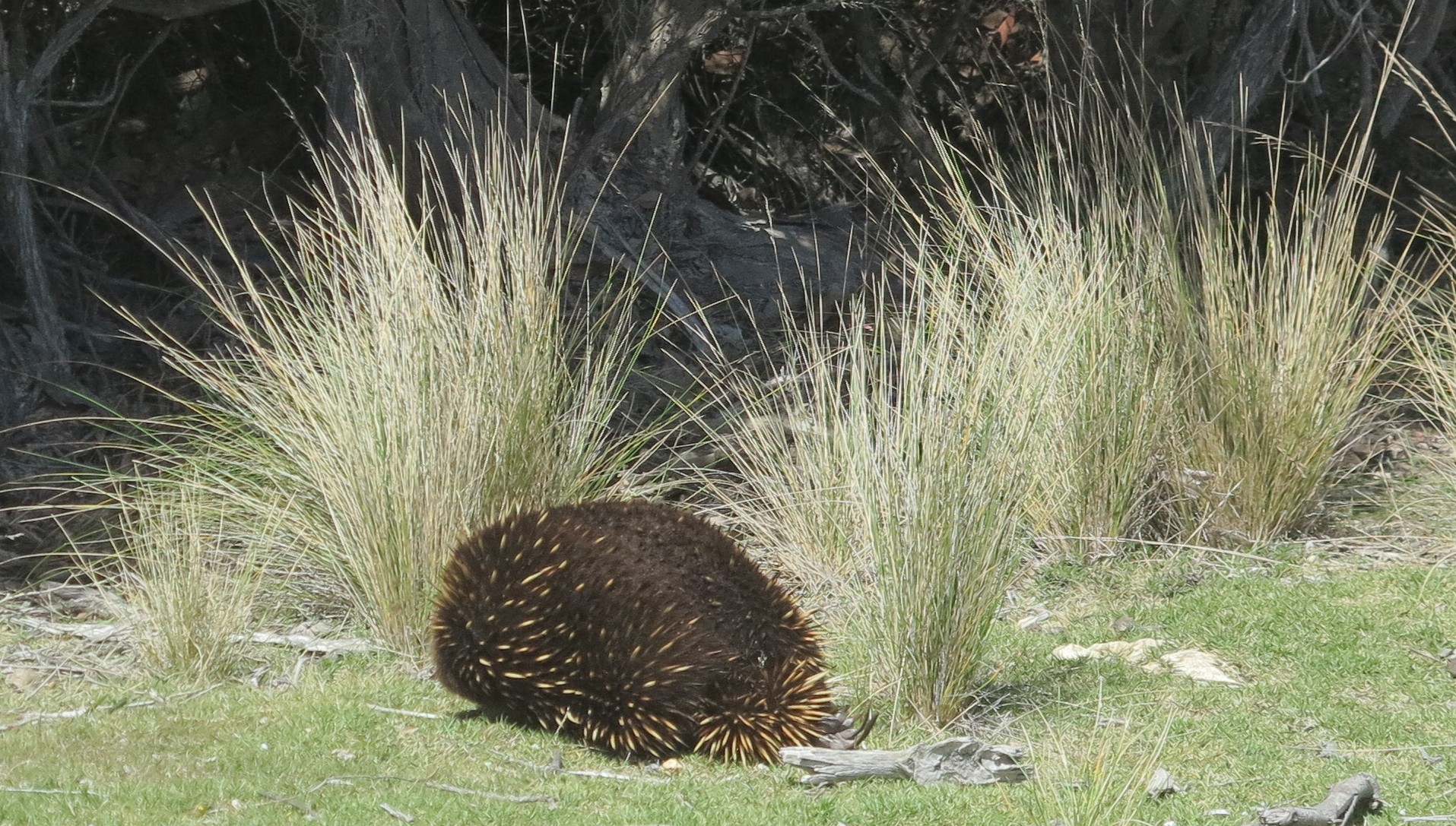
▲ A Flinders Island echidna
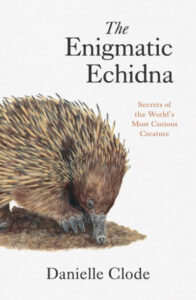
The Enigmatic Echidna by Danielle Clode starts with the idea that you simply don’t see them frequently – they keep away from us. Nevertheless I have encountered echidnas quite often, I have regular echidna sightings noted in my diary and when I search my photos I find echidna images on King Island, Flinders Island and Kangaroo Island and no doubt there are others which I haven’t labelled.
.
The book underlines how long it took us to learn much about them. Did they really lay eggs, the only other monotreme – egg laying mammal – is the platypus, but it took western scientists a long time to prove that fact. Of course they could have saved a century of research and an awful lot of dissected echidnas if they’d simply asked Aboriginals, but facts aren’t facts without Western proof?
.
Today we know a lot more about them, they’re extremely strong, they positively hate being penned up – echidnas are escape artists – and they have surprisingly big brains. But what are those brains for, apart from eating more ants what do echidnas think about? There’s lots more to learn including their hibernation habits, which seem to vary from place to place and echidna to echidna. Not just deep sleep hibernation either, echidnas are also masters of falling into torpor, shorter term hibernation, not just as an energy saving practice, but sometimes out of sheer boredom. I don’t like this situation? I’ll just fall asleep until it’s over.
.
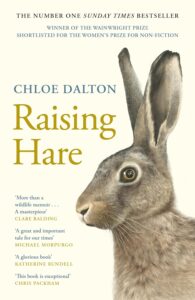
My other wildlife book of the past year is Chloe Dalton’s wonderful Raising Hare. The author comes across an abandoned baby hare, a leveret, and reluctantly takes it in. I’m a terrible stop and go reader, some books take me months to get through, but this one I raced through. Assorted reviews proclaim how good it is and I’m in agreement, it’s a simply wonderful book. It’s educational and thought provoking as well as touching and, as with those enigmatic echidnas, you learn all sorts of things you never suspected about hares. Starting with the simple fact that they are not rabbits, despite a superficial visual similarity in many ways they are nothing like rabbits.
.
Nor, the author solidly emphasises, was her rescued hare a pet. For starters she never gives it a name, but if you wanted a pet it would clearly be a nice one to have! For starters it is 100% tidy, it never had to be house-trained and when she later finds herself sheltering two more leverets, courtesy of her original hare, they don’t need to be house-trained either, Hare One looks after that. There is clearly real contact between hare and author, when it has its own leverets it brings them to her as if to show them off and parks them in the house having clearly said to them ‘she’s OK, she may be big, but you can trust her.’ And they do. Check this video of Chloe Dalton talking about her hare story.
Diving (and Walking) in Southwest Tasmania

10 May 2016 | Places

The Tasmanian Southwest Park is about as remote as you can get in Tasmania. The 84km South Coast Track runs from Cockle Creek, accessible by road at the eastern end of the park, to the airstrip at Melaleuca on an inlet from Bathurst Harbour in the west. Most walkers w...

View Post

Another Day of Life – Kapuściński’s Angola

9 May 2016 | Media

In 1975, as the military dictatorship in Portugal crumbled and their colonies in Africa (Angola and Mozambique) and Southeast Asia (Portuguese Timor) were cut loose the Polish journalist Ryszard Kapuściński turned up in Luanda and spent the next three months watching ...

View Post

Tikal – Guatemala’s Prime Mayan Site

8 May 2016 | Places

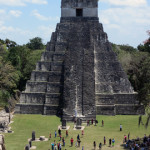
Although my recent visit to Guatemala – wearing my Global Heritage Fund archaeology hat – was principally to see the remote jungle site of El Mirador I also went back to Tikal, which I last visited way back in 1998. It’s a big contrast to El Mirador – no helicopter or...

View Post

El Mirador in Guatemala

6 May 2016 | Places

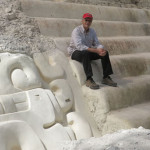
My recent travels in Central America (Panama) and the Caribbean (Cuba) started with a visit to Guatemala. Wearing my Global Heritage Fund archaeology hat I flew by helicopter to El Mirador, the remote Mayan site south of Flores and Tikal and close to the border with M...

View Post

Birdwatching in Panama – Soberania National Park

3 May 2016 | Living

The Panama Canal is a huge part of the Cuban economy and will become even more important when the expanded locks open next month and even larger New Panamax vessels can take that handy shortcut between the Atlantic and Pacific, paying up to US$376,000 for the trip. Th...

View Post

The Panama Canal

2 May 2016 | Transport

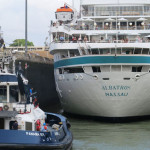
My principal reason for visiting Panama was, of course, to see the Panama Canal. A quick history: A French team led by Ferdinand de Lesseps constructed the Suez Canal linking the Mediterranean with the Red Sea. Originally 164 km in length it took 10 years to construct...

View Post

Panama City – Casco Viejo

1 May 2016 | Places

My Panama City visit featured the new skyscrapered financial centre and the original Spanish city Panamá Viejo, until it was sacked by the English pirate Henry Morgan. But I started my Panama visit by staying in Casco Viejo, the newer ‘old city’ which replaced the ori...

View Post

Panamá Viejo – Old Panama

30 April 2016 | Places

◄ We followed this taxi flying a pirate flag from an aerial. ‘Ah, il pirata,’ my driver commented. And then, somewhat ruefully: ‘Morgan.’ You can’t get away from Sir Henry Morgan, the English pirate who comprehensively sacked Panama back in 1671. Nearly 350 years l...

View Post

Panama City Buildings

30 April 2016 | Places

After my visit to Cuba – last gasp centre of fast-fading Communism – I travelled to Panama just as it became the worldwide symbol of greedy grasping Capitalism. Yes, the Panama Papers story broke just a day before I arrived in Panama City. So I looked up where ground ...

View Post

Santiago de Cuba & its Churches

29 April 2016 | Places

Wearing my Global Heritage Fund archaeological hat once again – as I did when I visited the National School of Arts in Havana – I looked at a number of churches in Santiago de Cuba with Stefaan Portmaan (GHF’s Executive Director) and archaeologist Santiago Giraldo (GH...

View Post