Latest Posts:

Enigmatic Echidnas & Raising Hares

Monday, 1 June 2026
The wildlife is often a big part of the travel experience. This year I’ve had black tip and white tip reef sharks when I’ve been snorkelling and scuba diving at Christmas and Cocos Keeling Islands, plus a very nice manta ray encounter. Birds have been a big part of the wildlife story, particularly boobies and frigate birds on Christmas Island and an amazing assortment of birds including gannets and guillemots, each on their selected level, on the wild cliff faces of the Orkney Islands. Christmas Island’s crab population has been the year’s big story so far, even though my visit was not during the prime November crab migration season.
.
Of course books on animal life also regularly pop up on my reading list, like Gisela Kaplan’s book Tawny Frogmouth, which I read after a pair of the owl-like birds moved in next door to me. They seemed to be keeping a close eye on me from a neighbour’s tree.
.
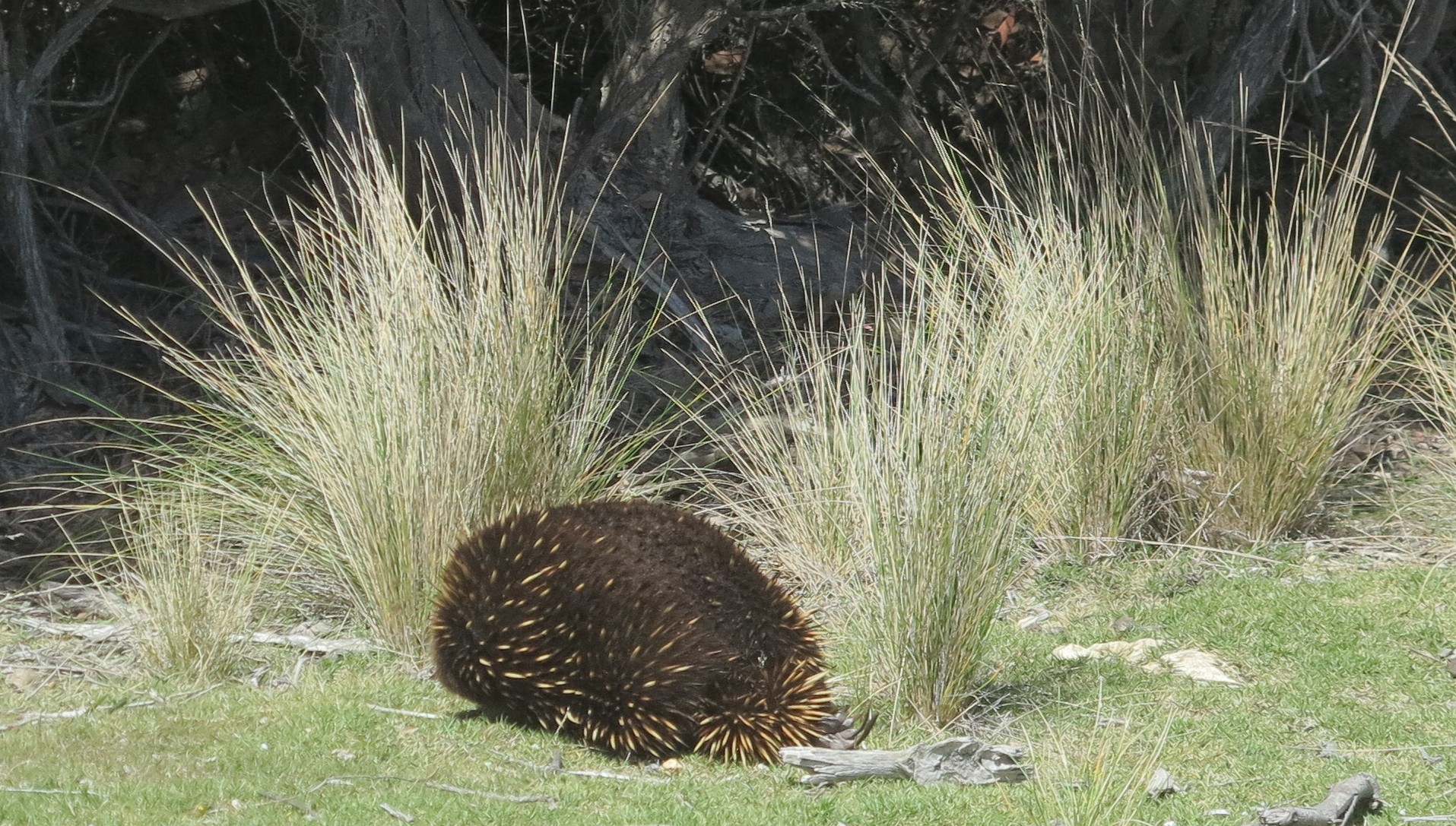
▲ A Flinders Island echidna
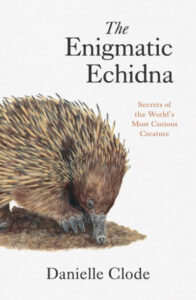
The Enigmatic Echidna by Danielle Clode starts with the idea that you simply don’t see them frequently – they keep away from us. Nevertheless I have encountered echidnas quite often, I have regular echidna sightings noted in my diary and when I search my photos I find echidna images on King Island, Flinders Island and Kangaroo Island and no doubt there are others which I haven’t labelled.
.
The book underlines how long it took us to learn much about them. Did they really lay eggs, the only other monotreme – egg laying mammal – is the platypus, but it took western scientists a long time to prove that fact. Of course they could have saved a century of research and an awful lot of dissected echidnas if they’d simply asked Aboriginals, but facts aren’t facts without Western proof?
.
Today we know a lot more about them, they’re extremely strong, they positively hate being penned up – echidnas are escape artists – and they have surprisingly big brains. But what are those brains for, apart from eating more ants what do echidnas think about? There’s lots more to learn including their hibernation habits, which seem to vary from place to place and echidna to echidna. Not just deep sleep hibernation either, echidnas are also masters of falling into torpor, shorter term hibernation, not just as an energy saving practice, but sometimes out of sheer boredom. I don’t like this situation? I’ll just fall asleep until it’s over.
.
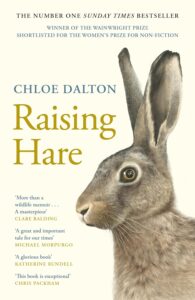
My other wildlife book of the past year is Chloe Dalton’s wonderful Raising Hare. The author comes across an abandoned baby hare, a leveret, and reluctantly takes it in. I’m a terrible stop and go reader, some books take me months to get through, but this one I raced through. Assorted reviews proclaim how good it is and I’m in agreement, it’s a simply wonderful book. It’s educational and thought provoking as well as touching and, as with those enigmatic echidnas, you learn all sorts of things you never suspected about hares. Starting with the simple fact that they are not rabbits, despite a superficial visual similarity in many ways they are nothing like rabbits.
.
Nor, the author solidly emphasises, was her rescued hare a pet. For starters she never gives it a name, but if you wanted a pet it would clearly be a nice one to have! For starters it is 100% tidy, it never had to be house-trained and when she later finds herself sheltering two more leverets, courtesy of her original hare, they don’t need to be house-trained either, Hare One looks after that. There is clearly real contact between hare and author, when it has its own leverets it brings them to her as if to show them off and parks them in the house having clearly said to them ‘she’s OK, she may be big, but you can trust her.’ And they do. Check this video of Chloe Dalton talking about her hare story.
Oxford to Abingdon on the Thames Path

28 June 2024 | Transport

Last year I spent several days walking the first 50-plus miles – 90km – of the Thames Path, the 184 miles (294km) route along the River Thames from its source to the Thames Barrage, east of London. That walk took me from the source to the university town of Oxford. ...

View Post

A Tourist in Nigeria

17 June 2024 | Places

Most of my recent Nigerian travels were with Médecins Sans Frontières (MSF) although I did see a fair amount on the road – or in the air. I noted in my recent post on South Sudan that I was visiting places where the western government travel advisories were essentiall...

View Post

On the road (or in the air) – Nigeria

6 June 2024 | Transport

Having started my African travels in Nairobi I continued north to Lake Turkana in Kenya and then crossed in to South Sudan, mainly spending my time in the Boma and Bandingilo National Parks. Next stop Nigeria, Africa’s biggest country in terms of population, but certa...

View Post

People & Places – South Sudan

2 June 2024 | Places

My visit to South Sudan featured a fascinating visit to ‘Lucy,’ the gigantic Jonglei Canal excavator, and unfortunately did not include a stop at the Imperial Airways Shambe flying boat base from the 1930s. I only saw that from the air, I would like to have had a look...

View Post

Parks & Wildlife – South Sudan

30 May 2024 | Places

My April travels through Africa took me to African-run projects in Nairobi, the capital of Kenya, in particular Food4Education. Then I explored the Lake Turkana area of north Kenya, landscapes and the tribes and people of the region. Continuing to South Sudan the aban...

View Post

The Jonglei Canal, Lucy & the Shambe Flying Boat Base in South Sudan

28 May 2024 | Places

◄ 'Lucy,' the giant Jonglei Canal excavator My recent travels in South Sudan were principally in the Boma and Bandingilo National Parks – more on that in my next blog post – although my travels started and finished in Juba, the capital of South Sudan. I visited Kha...

View Post

North Kenya – tribes & people

27 May 2024 | Places

My recent travels in north Kenya, around Lake Turkana, the Rift Valley lake which points north to the meeting point of Kenya with Ethiopia to the east and South Sudan to the west, was a chance to see landscapes and people. The landscapes varied from sand dunes to volc...

View Post

North Kenya – landscapes

22 May 2024 | Places

My recent African travels started in Nairobi, visiting Wawira Njiru’s amazing Food4Education project and reacquainting myself with the Thorn Tree Café, the inspiration for Lonely Planet’s long running and much missed Thorn Tree Travel Forum. Then I headed north for...

View Post

Food4Education, the Thorn Tree Café – a visit to Nairobi

18 May 2024 | Living

I’ve just spent a month in Africa, in Kenya, South Sudan and then, with Médecins Sans Frontières, in Nigeria. I started my travels with a brief visit to Nairobi, the capital of Kenya. ▲ Where I met Wawira Njiru at her Giga-Kitchen. This remarkable young woman studi...

View Post

Refugees – to Nauru, to Rwanda, from wherever

14 May 2024 | Media

‘Stop the Boats,’ it’s been a political war cry for both Australia and the UK. Look at a map and it’s easy to see why ‘stopping the boats’ is an easy story for Australians: Indonesia to Australia, the usual route, is a long way – 2000km across the Indian Ocean with pl...

View Post